Image 1 of 2
 Image 2 of 2

At the time of Columbus’ European discovery of Hispaniola, translated “The Spanish Island”, on December 6, 1492, Santo Domingo and Haiti were not yet partitioned. As the Spanish became more enamored with Central and South America, they largely abandoned the islands western third allowing the French to gain a foothold resulting in hostilities that were resolved in the 1697 Treaty of Ryswick with the division of Hispaniola’s western third as French Saint Domingue, now Haiti, and eastern two thirds as Spanish Santo Domingo, now the Dominican Republic.
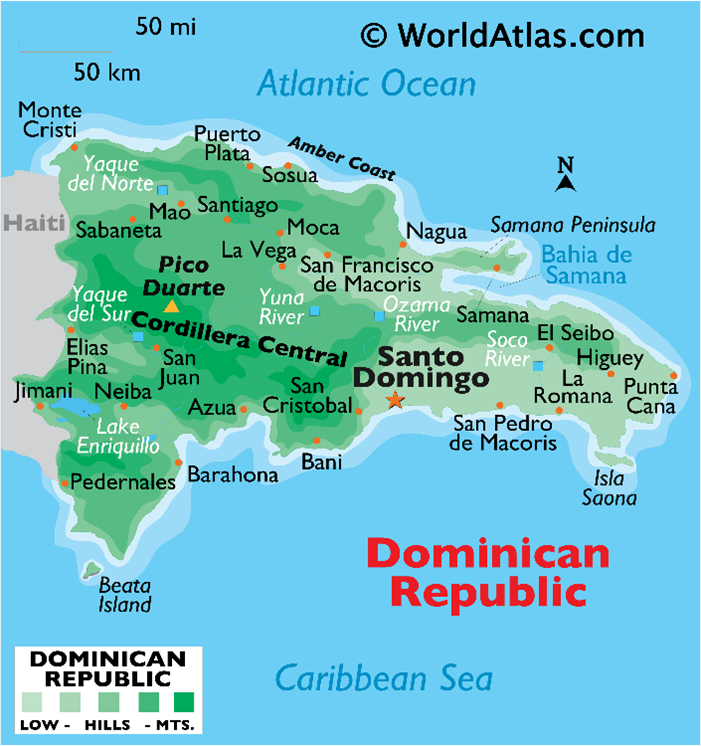
The historical relationship between the two is marked by war and attempted domination of one over the other. The current relationship is a tense acknowledgement of the others’ sovereignty along with stealthy, yet undeniable, interdependence. A complicated relationship to say the least. 870 miles southwest of Key West, due east of Cuba, due east of Puerto Rico and 588 miles due north of Caracas Venezuela, the Dominican Republic, at approximately the combined size of New Hampshire and Rhode Island, is the largest Caribbean along with the seventh largest Latin American economy. Haiti is considered the poorest in the Western Hemisphere… What could possibly be the difference? A 2007 International Monetary Fund working paper concludes, although Haiti was trailing the Dominican Republic, geographical and historical institutions prior to 1960 had little statistical influence. Although early French exploitive colonization practices of and recent natural disasters in Haiti undeniably added to instability, it appears that it is the most recent geopolitical Haitian institutional and environmental decisions have been most devastating. Either way, there has been a definite winner and a definite loser. Amid prosperity and melancholy, both countries cultivate the most delicious of coffee… we are fortunate.
Process: Washed… cherry removed before drying.
Elevation: 4600 feet