Image 1 of 2
 Image 2 of 2
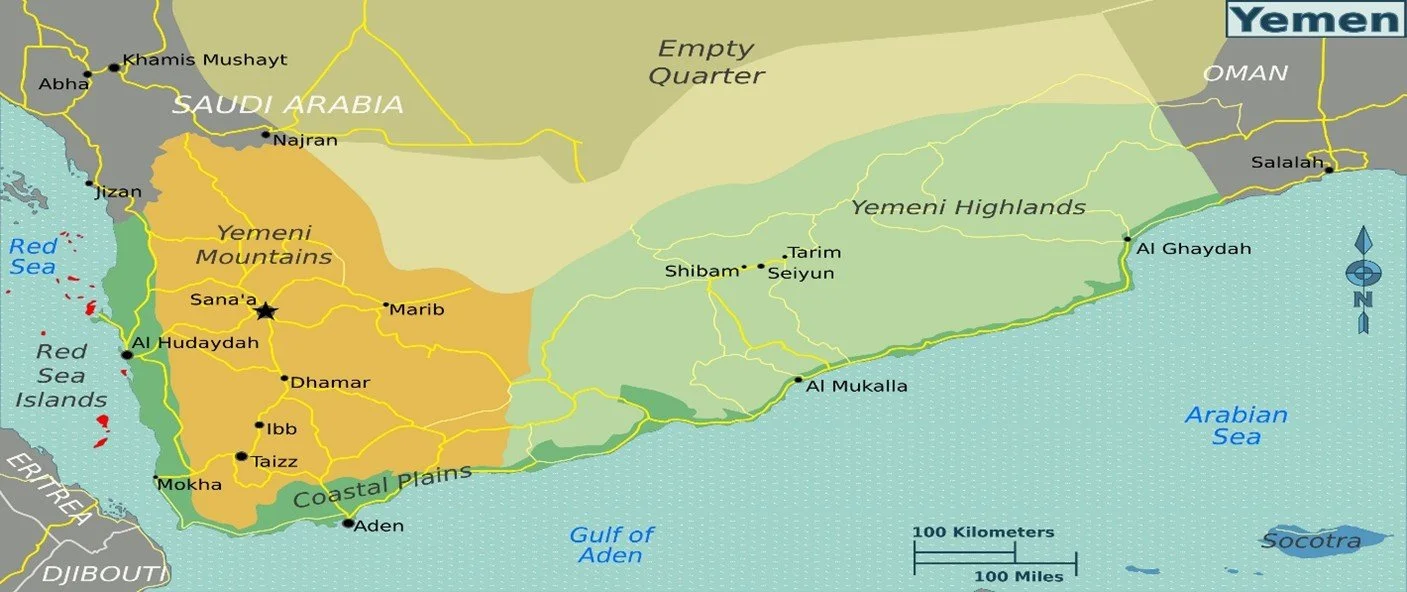
Slightly larger than California, Yemen, the southernmost country on the Arabian Peninsula, is bordered north by Saudi Arabia and east by Oman with a southern coastline on the Gulf of Aden and Arabian Sea along with a western coastline on the Red Sea. A stone skip away is the African Continent. The Horn of Africa yars there westerly separated only by the Bab-el-Mandeb, translated Gate of Tears, which is a narrow 14 nautical mile wide ocean passageway. The name sake attest to the associated historical navigational perils intrinsic in such a novel geographic anomaly and, according to Arab legend, from the multitude drowned by an earthquake that separated the Arabian Peninsula from the Horn of Africa. Current history does not balk at this characterization. Due to its strategic link between the Indian Ocean and Mediterranean Sea via the Red Sea and Suez Canel the area has been a geopolitical lightning rod. Currently, insurgent Houthis rebels control Sanaa, the Yemenis capital, requiring the legitimate Presidential Leadership Council to establish a provisional capital in the southern port city of Aden. Consequently, international trade in the narrow straight has been disrupted raising global ire. Saudi Arabia has led an international coalition against the Houthis since 2015 with the result being tears, grief and lamentation for the Yemen’s people… highest in the Fragile States Index, 2nd worst in the Global Hunger Index and world’s least peaceful country in the Global Peace Index. Yet the miracle of coffee prevails. Although Ethiopia claims coffee’s origin, Yemen was the original commercial source and is credited with the world’s most common varietals, Bourbon and Typica.
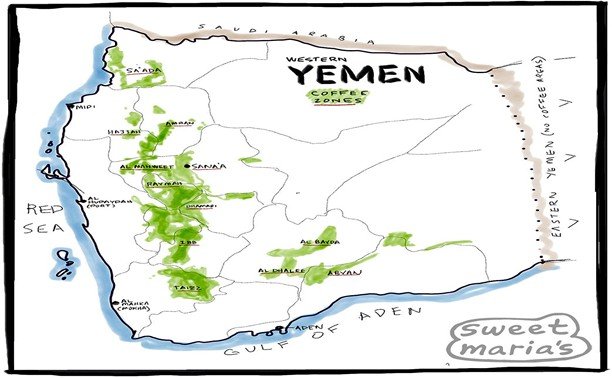
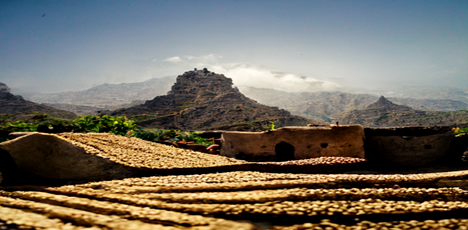
Our nugget comes from the Ibb Al-Qafr Coffee District, in southwestern Yemen, which is approximately 220 miles northwest of the Bab-el-Mandeb, 220 miles south of Saudi Arabia,120 miles due south of the capital Sanaa and 180 miles due north of the provisional coastal capital Aden. Hawari, our coffees name sake, is translated friend, companion or helper and in the Islamic tradition signifies roles such as apostle, follower or supporter. Our caffeinated little “helper” is made possible by Fatoum Muslot who manages her family coffee business, Pearl of Tehama, originating with her father in the 1950’s. Ms. Muslot sources from 131 small familial farms where cherries are harvested and dried on roof tops creating a mosaic when viewing the town from above. Due to both Yemen’s extreme political as well as tough physical environment, it is a miracle we get coffee at all, let alone a quality coffee… much can go awry when sourcing these coffees. Needless to say, we hit the motherload on this one. The Hawari is super complex and pegs the needle with body.
Process: Natural… cherries are dried on rooftops creating a colorful mosaic when viewing the town from above.
Elevation: 4265 – 4920 feet